Violation of the laws of logic in the position of the Supreme Court on punishment for weapons
20 March 2019
It seems that the Supreme Court is trying to solve the problem of punishment for illegal handling of weapons in the absence of a law regulating the procedure for its circulation by substituting legal concepts.
For about three years now, lawyers have been discussing the possibility of bringing to criminal responsibility for illegal handling of weapons in the absence of a law that defines the procedure for civilian circulation of weapons.
During this time, courts across Ukraine have passed hundreds of decisions returning indictments to prosecutors because they do not specify which law was violated by the person accused of illegal handling of weapons.
During 2018, more than ten acquittals were delivered, motivated by the principle of law, according to which: “No one can be punished for violating something that is not prohibited by law”. Currently, there is no law in Ukraine that prohibits or restricts the circulation of weapons.
Instead, the procedure for handling weapons is currently regulated by the police instruction, which is approved by the order of the Ministry of Internal Affairs No. 622 and cannot be considered an authoritative act that can determine the legal regime of ownership of such things.
After all, the norms of the Constitution and the Civil Code stipulate that the issue of negotiability of things is determined EXCLUSIVELY by law. The draft of such a law, in particular #1135-1, has been in the Verkhovna Rada for about 5 years without consideration.
That is why in the acquittals of those accused of illegal handling of weapons, the courts stated that the existence of a police instruction does not indicate the existence of a law, the norms of which the accused person could violate and be punished accordingly.
However, the new Supreme Court in 2018 made two attempts to recognize the possible punishment for illegal handling of weapons in the absence of a relevant law.
In the first ruling of 31.05.2018, the Supreme Court noted that in order to apply Article 263 of the Criminal Code, which provides for liability for handling weapons without a permit provided by law, it is necessary to analyze the relevant law, but, according to the court, the concept of “law” has a broad interpretation, which includes other normative acts.
At the same time, the Supreme Court did not specify whether the law that defines the procedure for arms turnover can be understood as by-laws of the Cabinet of Ministers of Ukraine or police instruction No. 622.
The second ruling of the Supreme Court of 04.12.2018 made a fairly broad analysis of Article 263 of the Criminal Code, which substantiates the possibility of criminal prosecution for illegal handling of weapons in the absence of a law on weapons.
However, in this conclusion of the Supreme Court we observe a violation of the laws of logic, which leads to the substitution of the concepts of “law” for “legislation”, “statutory permission” for “permission” and the presence of contradictions in the text. In this case, there may be a manipulation of concepts. Let’s try to figure it out.
On 04.12.2018, as a result of the consideration of case No. 161/3885/16-к, the Supreme Court adopted a resolution (hereinafter – the “Resolution”), in which conclusions were made regarding Art. 263 of the Criminal Code of Ukraine, namely:
- 20. The Court notes that the ECHR in the case of “Virentsov v. Ukraine” considered the situation with a blanket rule, when a person was brought to administrative responsibility, in particular, for violation of the procedure for holding demonstrations in the absence of a clearly established procedure in the legislation, which led to a violation of Article 7 of the Convention for the Protection of Human Rights and Fundamental Freedoms.
- 21. However, the construction of part one of Article 263 of the Criminal Code differs significantly from the construction of Article 185-1 of the Code of Ukraine on Administrative Offences, which was the subject of consideration in the Verentsov case.
- 22. The disposition of part one of Article 263 of the CC cannot be considered blanket, as it does not refer to other laws or regulations in the definition of prohibited acts, but defines them in its text. According to this provision, it is prohibited: “the carrying, possession, acquisition, transfer or sale of firearms (other than smooth-bore hunting weapons), ammunition, explosives or explosive devices”.
- Actually, this prohibition is the disposition of the first part of Article 263 of the Criminal Code, which is accompanied by the sanctions defined in the same provision.
- 23. The reference to another “law” is not contained in the disposition of this provision, but in the wording of the condition that determines when its disposition can be applied: “without the authorization provided by law”. If there is no “permit”, the condition is fulfilled, and the disposition of the first part of Article 263 of the Criminal Code is in force, that is, the prohibition of “carrying, storage, purchase, transfer or sale of firearms (except for smooth-bore hunting weapons), ammunition, explosives or explosive devices”. On the contrary, the existence of the relevant permit indicates the absence of a condition provided by law under which the disposition of this provision can be applied.
- 24. The conditions that determine the application of the disposition of the norm, in the theory of law refer to the hypothesis of the norm. Thus, the words in part one of Article 263 of the Criminal Code of Ukraine“without the permission provided by law” define one of the elements of the hypothesis of the norm, which – along with the general elements of the conditions for criminal liability contained in the General Part of the Criminal Code of Ukraine– determines the possibility of applying the disposition and, accordingly, the sanction of part one of Article 263 of the Criminal Code.
- 25. In this part, the provision of part one of Article 263 indeed refers in its content to other laws, requiring that a permit that excludes criminal liability for actions with weapons be provided for by law. Similar constructions of norms, which contain a certain disposition and blanket hypothesis of the norm, are also contained in other articles of the Criminal Code (see. For example, Articles 265, 267-1, 268, 290, 321 of the Criminal Code), which is a common method of constructing the corpus delicti in criminal legislation.
- 26. The defence insists that the interpretation of the word “law” in part one of Article 263 of the CC should be based on a narrow understanding of this term, which excludes reference to a lower-level normative act. But if we follow this logic, a “permit” issued not on the basis of a “law” in the narrow sense, but on the basis of a by-law, cannot be considered a “statutory permit” within the meaning of part one of Article 263 of the Criminal Code. In other words, according to this interpretation, a person who has a permit issued on the basis of a departmental normative act should be held criminally liable under part one of Article 263 of the Criminal Code, since such a permit does not meet the requirement specified in this provision.
Let us analyze each of these conclusions from the point of view of logic.
Is the norm blanket or not blanket? Is the order violated or not violated?
The Resolution (paras. 20-21) states that the conclusions from the judgment of the European Court of Human Rights in the case of “Verentsov v. Ukraine” cannot be applied to Article 263 of the Criminal Code, since in the case of “Verentsov v. Ukraine” the court considered the situation with a blanket rule that established liability for violation of a certain order.
Instead, according to the Supreme Court, Article 263 is not blanket, as in the case of Verentsov v. Ukraine, because its disposition is not blanket.
However, to determine the structure of the “norm”, legal theory and the Supreme Court operate with the concepts of hypothesis and disposition. If Article 263, according to the Supreme Court, consists of a hypothesis and a disposition, with one of these elements being definite and the other being “blanket”, then the norm as a whole cannot be definite. After all, one of its structural elements is not defined.
Thus, in paragraphs 24-25 of the resolution, the Supreme Court itself refers part of the norm of Article 263 to the “blanket hypothesis“.
Thus, the conclusion that the provision of Article 263 is not blanket, despite the fact that it consists of a blanket hypothesis, contradicts formal logic.
As for the violation or not of the order, it is worth paying attention to the title of Article 263 of the Criminal Code – “illegal handling of weapons”. Thus, the objective side of the crime is the behavior that violates the law, and not any other order. Because this article provides for liability for actions with weapons without the permission provided by law.
It seems logical that the legality of treatment lies in compliance with the relevant procedure established by law. Therefore, in the essence, the offense under Article 185-1 of the Code of Administrative Offenses (hereinafter – the CAO), which was the subject of consideration by the ECHR in the case of “Virentsov v. Ukraine” and the offense under Article 263 of the Criminal Code do not differ, because Article 185-1 of the CAO provides for punishment for violation of the procedure for holding rallies, meetings, etc. According to the Constitution of Ukraine, this procedure should be determined exclusively by law.
Similarly, the procedure for acquiring property is determined exclusively by law (Article 41 of the Constitution), as well as the entire legal regime of property (in particular, possession, use, disposal of things) is also determined exclusively by law (paragraph 7 of Article 92 of the Constitution).
Even the unauthorized order of the Ministry of Internal Affairs No. 622 approves the procedure for the manufacture, purchase and storage of weapons…
Thus, Article 263 of the Criminal Code of Ukraine also establishes liability for violation of the procedure, which should be determined by law.
Does it prohibit or not?
Paragraph 22 of the resolution states that in accordance with the provisions of Article 263 of the Criminal Code of Ukraine “shall be prohibited”:
“carrying, possessing, acquiring, transferring or selling firearms (other than smooth-bore hunting weapons), ammunition, explosives or explosive devices”.
However, Article 263 does not contain the word “prohibited” or a similar term (“not allowed”, “obliged to abstain”, “not to encroach”, etc.), such words are not found in the text of the General Part of the Criminal Code.
Instead, the conclusion of the Supreme Court on the existence of a prohibition in Article 263 may be explained by one of the approaches to understanding the objectives of the Criminal Code, which determines that the crime is the commission of “evil”, and “evil” is prohibited, which is self-evident (apriori). The list of crimes (ways of committing evil) is established by the Criminal Code.
However, even this approach divides “evil” into two conditional categories:
1) “malum in se” (evil because it is);
2) “malum prohibitum” (evil because it is forbidden).
Handling weapons cannot be considered malum in se (evil because it is). After all, weapons are widely used as a means of protecting the rights and freedoms, sovereignty and territorial integrity of the country. Also, it is worth mentioning shooting sports and hunting.
If we exclude the statement that weapons are “evil because they are”, then the conclusion remains that weapons are “evil because they are forbidden”. Therefore, in the handling of weapons for citizens there should be a special law that establishes prohibitions and restrictions that would guarantee protection against arbitrariness and the inviolable principle of legal certainty. That is, even in this case, a special law on the handling of weapons is needed.
However, the fact that the purpose of the Criminal Code is the protection of social relations regulated by other laws is evidenced by its Article 1, which states that “The Criminal Code of Ukraine has as its task the legal protection of human and civil rights and freedoms, property, public order and public safety, environment, constitutional order of Ukraine from criminal encroachments, ensuring peace and security of mankind, as well as prevention of crimes. The concept of “law enforcement agencies” is also related to this.
The limits of “legal” behavior are established primarily by the Constitution of Ukraine, not the Criminal Code. Otherwise, the Constitution would perform not practical tasks of regulation, but rather nominal ones.
Thus, the Constitution is the Basic Law of Ukraine and its norms define the main limits of “legal” behavior (Article 19 and Article 68) by establishing prohibitions and restrictions. Thus, Article 68 of the Constitution stipulates that everyone is obliged to strictly observe the Constitution of Ukraine and the laws of Ukraine, not to encroach on the rights and freedoms, honor and dignity of other people.
The presence of the phrase “strictly comply” means a prohibition to act otherwise. Accordingly, non-compliance with the Constitution or laws entails liability, including criminal liability. “Do not infringe” in the meaning of “it is forbidden to infringe” on the rights and freedoms, honor and dignity of other people, just establishes the prohibition.
Instead, a special part of the Criminal Code defines liability for “encroachment” on rights in a certain way (“rape” is a kind of violation of honor and dignity, the right to life and personal inviolability; “murder” is an arbitrary violation of the right to life, which is prohibited, in particular, by Article 27 of the Constitution of Ukraine and Article 281 of the Civil Code of Ukraine, etc.)
For example, failure to comply with the requirements of the Law of Ukraine “On Narcotic Drugs, Psychotropic Substances and Precursors”, which establishes “prohibitions” on the trafficking of narcotic drugs, entails liability under the articles of Section 13 of the Special Part of the Criminal Code.
This approach provides legal certainty for citizens, establishes precise boundaries of acceptable behavior and protects against arbitrariness in matters of criminal prosecution. Most importantly, this approach gives an answer to the question: if certain actions are considered to be a “Right Violation”, what “right” is violated?
Manipulation of the concepts of “permission provided by law” and “permit”
In paragraph 23 of the ruling, the Supreme Court concluded that Article 263 of the Criminal Code of Ukraine refers to another “law” not in the disposition of this provision, but in the wording of the condition that determines when its disposition can be applied.
Allegedly, the absence of a permit is a fulfilled condition for the disposition (determination), and therefore for the sanction (punishment), and the presence of an “appropriate” permit indicates the absence of the condition.
Here, the usual substitution of the concept of “permit provided by law” for the broader concept of “permission” took place and from this assumption it was concluded that in the absence of “permission” the condition is met.
At the same time, the Supreme Court refers to the phrase “without the permission provided by law” as a condition, and not just “without permission” or “without appropriate permission”.
Obviously, it was deliberately omitted that such permission should be provided by law. However, guided by this general understanding of the concept, any person can make and provide a permit for weapons, because the law does not provide otherwise.
Therefore, the absence of a “law” that provides for a permit for weapons makes the condition uncertain and therefore absent altogether. In the absence of a “condition”, the disposition and sanction cannot be applied.
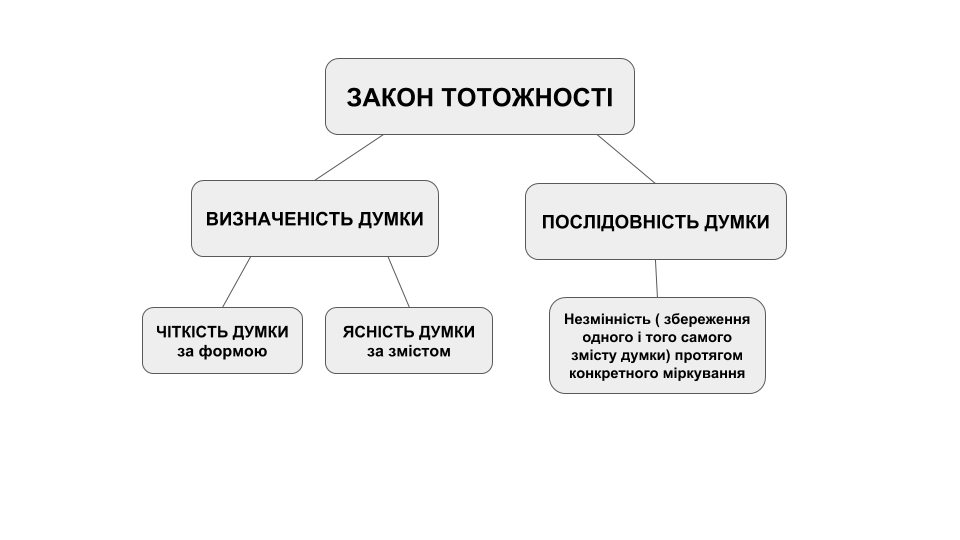
Selective analogies with other articles of the Criminal Code
In paragraph 24 of the ruling, the Supreme Court notes that similar constructions of norms containing a certain disposition and a blanket hypothesis (sic!) of the norm are also contained in other articles of the Criminal Code (Articles 265, 267-1, 268, 290, 321), which is a common method of constructing the corpus delicti in criminal legislation.
However, all the articles of the Criminal Code mentioned by the Supreme Court, except, in fact, Article 263, have as their object of protection the relevant procedure established by law. For example, Article 265, which is the most similar in construction to Article 263, has three such laws.
Thus, the manipulation set out by the Supreme Court is easy to see in a simple comparison of the articles:
art. 321 – “special permit” (there is a law),
art. 290 – “permission of the relevant authorities” (there is a law),
art. 268 – “proper authorization” (there is a law and an international agreement),
art. 267-1 – “permission by law” (there is a law),
art. 265 – “without a permit provided by law” (there is a law, even three),
art. 263 – “without the permission provided by law”(there is no law).
As you can see, every article that the Supreme Court mentions as an analogy has a law that is protected by it, but the court makes an exception to analogies only for “weapons”.
Substitution of the concept of “law” by the concept of “legislation”
In paragraph 26 of the judgment, the Supreme Court states that the term “law” has an extended interpretation. From this the court concludes that the term “law” includes all normative legal acts.
Here the Supreme Court again manipulates, substituting the concepts of “in particular” and “legislation”. After all, there is no extended interpretation of the concept of “law”. Instead, there are narrow and broad interpretations of the concept of “legislation”.
A law is a normative legal act that has the highest legal force and is adopted only by the legislative power – the parliament or directly by citizens in a referendum.
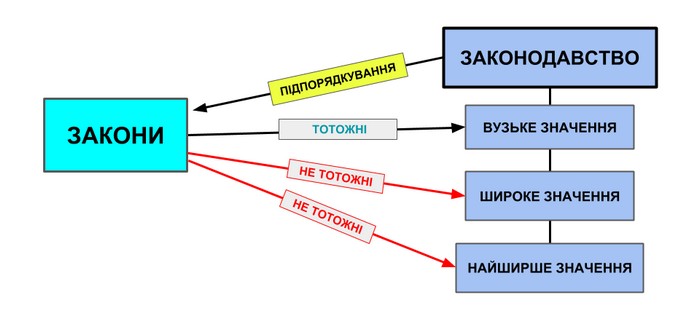
“Legislation” is a broader concept to which “law” is subordinate. In addition to laws, subordinate to the concept of “legislation” are subordinate normative acts (acts of the Cabinet of Ministers, central executive bodies: regulations, instructions, etc.)
By-laws and laws are different concepts. By-laws cannot be laws and not laws at the same time. The volumes of these specific concepts do not coincide, they are included in the volume of the generic concept of “legislation” (the relationship of subordination).
The graphic diagram shows the relationship between the concepts of “legislation” and “laws” (the system of laws of Ukraine)
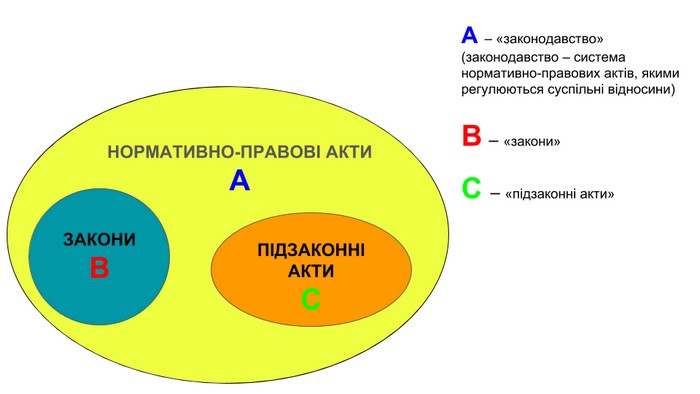
Also, retired judges of the Constitutional Court of Ukraine expressed their opinion on this issue. Shishkin and B. Stetsyuk, according to which, from the point of view of formal logic, the concepts of “law” and “by-law” (regulations, instructions, orders, resolutions, etc.) are incompatible concepts that are in a logical relationship of subordination to the more general concept of “normative legal act”.
The graphic scheme reflects the subordination between the concepts of “law” and “by-law” in relation to the general concept of “normative legal act”
Moreover, the Supreme Court in its ruling of October 02, 2018 made an unequivocal conclusion that the constitutional concept of “law” cannot have an expanded interpretation.
Accordingly, acts of the Cabinet of Ministers of Ukraine cannot substitute laws and regulate relations that should be regulated exclusively by laws.
Instead, the interpretation that the term “law” in the criminal code has multiple meanings leads to uncertainty, contradiction and arbitrariness.
The conclusion is undeniable: “As long as there is no law on the permissive procedure for possession of weapons (legal restriction), any possession cannot result in legal (including criminal) liability under Articles 8, 19, 23, 41, 68, 92 of the Constitution of Ukraine”.
Restriction of circulation of things is possible only on the basis of the law, not instructions of the Ministry of Internal Affairs.
Liability is not possible for lawful conduct, i.e. conduct that complies with the Constitution of Ukraine. For example, in cases where a person acquired a thing in accordance with Article 41 of the Constitution and owns it in accordance with Articles 319 and 328 of the Civil Code.
These norms provide for freedom of acquisition and possession of a thing, except when such acquisition or possession is restricted exclusively by law. At the time of adoption of Art. 263 of the Criminal Code of Ukraine (2001), such laws were the Civil Code of the Ukrainian SSR and the Law “On Property”, which expired in 2004 and 2007.
The substitution of the concept of “law” with the concept of “legislation” allows the police instruction to be equated with the law and to be held liable for its violation in terms of obtaining a permit for weapons. Although such permission is not provided by law.
Questions instead of conclusions
If the Supreme Court considers that the law is formulated clearly enough for a person to foresee the consequences of its violation, can the court answer the following questions from its conclusions:
“Will a person be liable for possession of a smooth-bore, muzzle-loading shotgun 650 mm long? In which law should the owner read about it?”
Authors
Lawyer Vitaliy Kolomiets
Managing partner of OK Law Firm, attorney at law Mykola Orekhovskyi
We thank you for your help in preparing the article:
Doctor of Law, Professor
Honored Worker of Science and Technology of Ukraine
Academician of the Academy of Sciences of Higher Education of Ukraine – Pavlo Lvivovych Fris
Doctor of Philosophy, Associate Professor – Shcherbyna Olena Yuriyivna


